By A. Chris Wikman – Dec 2025
(My colleague Chris Wikman brought a longer view of this piece to my attention recently, a framework that is very similar and complementary to my own as expressed in other entries in this blog. Deserving exposure to others, it is published here just as Chris wrote it.)
Summary
In this new theory, or perhaps more properly a model or framework, and with some apparent novel aspects, we treat space-time as emergent, place consciousness prior to physics, and allow multiple universes as informational projections. We posit that there is a quantum field which comprises the Information Manifold (IM) with all knowledge past and present. Consciousness is an operator upon and reflects a trajectory upon the IM, and becomes associated with a physical lifeform such as a human. An aspect of our consciousness known as the subconscious retains an ability to remain in contact with the IM, and acts as a filter for information in the IM, which sometimes “bubbles up” to our conscious mind, with often surprising ideas or “unknowable” facts. Once our physical body dies, our consciousness leaves the body and typically enters a decoherent interval which we can call the Intermission. Eventually we may reincarnate by attaching to the body of a new lifeform. However, as a human, we are typically not aware of the universe’s true reality. By learning and practice, such as through meditation we can become able to lift the veil.
Introduction
Humanity’s search for meaning in life goes on, as well as to better understand ourselves and our environment. There are working theories of consciousness, “established” science for the physical universe, ancient teachings, and various spiritual practices alive today, from which to draw upon and integrate. Here I propose a working model that ties aspects of these together into an integrated framework. We build upon the prior work of Maria Stromme, Ervin Laszlo, Giuseppe Vitiello, Bernardo Kastrup, Vince Giuliano, and many ancient traditions and teachings. Others who have gone before with aspects of, related theories, or supporting research include David Bohm, Donald Hoffman, Ken Wilber, Rupert Sheldrake, Tom Campbell, and Dean Radin.
We will compare our model to the works of others, and identify what we build upon. We suggest a model which ties together consciousness, altered modes of consciousness, the subconscious, death and paranormal activities. This theory, as does others, solves the Hard Problem of Consciousness (Chalmers) by positing consciousness as fundamental (as in panpsychism/idealism) rather than emergent in the brain itself.
Ervin Laszlo proposed that the Akashic Record—a concept drawn from ancient metaphysics—can be coherently reinterpreted in modern terms as a fundamental quantum informational field that underlies and connects all physical phenomena. In his theory, often referred to as the Akasha Field (or A-field), this field functions as a nonlocal repository of information that preserves the traces of all events, interactions, and states across space and time. Laszlo argues that quantum nonlocality, coherence, and entanglement point to the existence of such a field, which enables the apparent fine-tuning of the universe, the coherence of living systems, and even anomalous phenomena such as intuition or collective memory. Importantly, the Akashic field is not conscious in a personal sense but informational and ordering, providing a cosmic memory that structures both matter and mind. While speculative, Laszlo’s model seeks to bridge physics, biology, and consciousness studies by positioning information—not matter—as the deepest level of reality, offering a scientifically flavored reinterpretation of an ancient idea rather than a literal metaphysical archive.
Dr. Stromme’s paper proposes that consciousness should be treated not as an emergent property of matter, but as a fundamental field-like aspect of reality, analogous in form (though not in physical identity) to quantum fields such as the electromagnetic or Higgs fields. In this model, individual minds are not separate substances but localized excitations or modulations of a universal consciousness field, with brains functioning as boundary conditions that shape and constrain these excitations. Quantum phenomena—especially nonlocality, entanglement, and observer-dependence—are interpreted as natural consequences of this deeper field-level unity, rather than as paradoxes requiring ad hoc explanations. The paper emphasizes that spacetime and matter are secondary structures arising from interactions within this field, and that consciousness is inherently relational and nonlocal rather than spatially contained. While largely theoretical and speculative, the work aims to provide a mathematically inspired ontology that unifies consciousness, quantum mechanics, and cosmology without reducing subjective experience to computation or classical information processing.
Our model has much in common with Vitiello’s Dissipative Quantum Brain model, which explains levels of consciousness as different attractor states in a quantum field that is entangled with the environment. In other words, consciousness is not inside the brain — it is a brain–universe coupled system. Vitiello’s theory treats the brain as a quantum field, continuously exchanging energy and information with the environment, and creating memory and identity through phase-locked field patterns.
Quantum idealism is a family of interpretations of quantum mechanics that takes consciousness or mind-like properties to be ontologically fundamental, with the physical world emerging as a relational or representational structure rather than as mind-independent substance. In this view, quantum phenomena such as superposition, nonlocality, and observer-dependence are not paradoxes caused by measurement limitations, but natural consequences of a reality whose deepest level is experiential or informational rather than material. Modern proponents—most notably Bernardo Kastrup—argue that the universe is best understood as a unified field of mind, within which individual conscious agents arise through localized dissociation, and where spacetime and matter function as appearances or interfaces. Our framework has some similar aspects: both treat consciousness as primary, reject spacetime as fundamental, and model physical reality as a constrained projection within a deeper informational manifold. Where quantum idealism often stops at explaining measurement and ontology, our theory extends the same logic to identity, death, altered states, and multiverse dynamics—recasting quantum idealism not merely as an interpretation of physics, but as a general theory of reality in which consciousness operates as a state-selection process across informational structure.
Our model is similar to but also builds upon Analytical Idealism (Bernardo Kastrup being the main architect). Analytic Idealism is basically the idea that the universe runs on mind, not matter. Analytic Idealism says that only consciousness exists fundamentally. Matter, space, time, and brains are appearances within consciousness, not the other way around. Analytic Idealism explains nonlocal consciousness, psychedelic ego death, mystical unity, an Akashic-style memory, and near-death experiences.
Though empirical validation remains elusive, Dr. Vincent E. Giuliano presents a comprehensive philosophical, scientific, and practical framework for understanding how reality comes into being and how human beings participate in its creation. He proposes that ordinary cause-and-effect action, while necessary, is insufficient to explain either personal experience or the deeper structure of reality. Instead, he introduces a model he calls Macroscopic Reality Creation (MRC), which parallels quantum-level processes and reframes creation as the intentional alteration of probabilities governing space, time, and matter rather than as direct physical causation. At the foundation of this model is a distinction between the observable universe, a domain he calls Everything-Nothing (EN)—a timeless field of pure potential—and Source, which he describes as the totality of consciousness operating on EN to bring universes and events into manifestation. Within this ontology, human beings are understood as expressions of Source, not separate from it, and thus capable—within limits—of participating in creation through intention, commitment, and unbounded declaration rather than through effort alone. Giuliano argues that creation begins as a state of being rather than an action, and that once a genuine declaration is made, reality reorganizes itself—often invisibly and retroactively—to make the declared outcome appear to have arisen through ordinary causal chains. To make this philosophically plausible, he draws heavily on interpretations of quantum mechanics, particularly the many-worlds and transactional interpretations, suggesting that intentionality functions analogously to a quantum operator selecting among parallel reality contexts rather than collapsing a single deterministic timeline. Giuliano argues that the purpose of the universe is to provide a container in which consciousness can manifest, organize, and evolve into increasingly complex forms, and that the purpose of human life is to knowingly participate in this creative process as an agent of Source.
This is not to disparage the views and teachings of major religions. We believe that most all religious teachings were once based upon common morals and beliefs but have been revised, misinterpreted, and revised by misguided people or for egotistical and other purposes to suit those in power. It is likely that the various prophets, etc. were real people who were truly mystics but whose original messages have been jumbled to the point of being mostly lost to us. We’re not claiming that other teachings are wrong. At this time we’re unable to verify either side of the debate.
Mainstream science has rejected most of these ideas due to lack of reproducibility, verifiability, and the materialist paradigm. Further, models of consciousness remain strongly influenced by disciplinary context. Neuroscience and biology, grounded in localized intervention and measurement, tend to favor substrate-dependent accounts, while physicists, philosophers, cosmologists, and scholars of contemplative traditions are often more open to non-local or informational interpretations. This difference likely reflects methodological constraints rather than consensus on ontology, and suggests that a full theory of consciousness may require integration across disciplines rather than dominance by any single one. We applaud the work of Campbell in striving to design experiments to address these issues. Recent papers such as that by Stromme hint that there are at least some cracks in the wall. Modern science has its place, and we suspect that over time, we will uncover the means to develop the experiments to confirm these ideas contained herein.
Basic Framework
The basic framework (see Figure 1) is as follows:
1. The Information Manifold: A field which contains all possible states and relations – something like the Akashic Records (all possible timelines).
2. The Separation: Consciousness is an operator upon the IM and fragments into individual units with limited perspective.
3. The Vehicle: The physical body is necessary to maintain this separation and filter infinite data down to manageable sensory input.
4. The Receiver: The brain (perhaps via microtubules) acts as a “radio tuner”, associating with a specific individual consciousness. Damage the radio, you damage the reception, not the signal.
5. The Interface: The subconscious mind is the bridge between the localized conscious mind and the Information Manifold.
6. Mechanisms: Through states like meditation, we quiet the sensory noise, access reduced “filtering” of the IM via the subconscious interface, and intentionally select/navigate toward specific quantum reality branches.
Quantum-mechanical terminology in this framework is used in a structural and operational sense rather than as a claim about underlying physical mechanisms. Concepts such as Hilbert spaces, non-commutation, and projection are employed as mathematical tools for modeling constrained access to informational possibility, not as assertions that consciousness is reducible to quantum microphysics. Where physical quantum processes play a role remains an open empirical question, but the framework’s core claims do not depend on any specific quantum-biological mechanism.
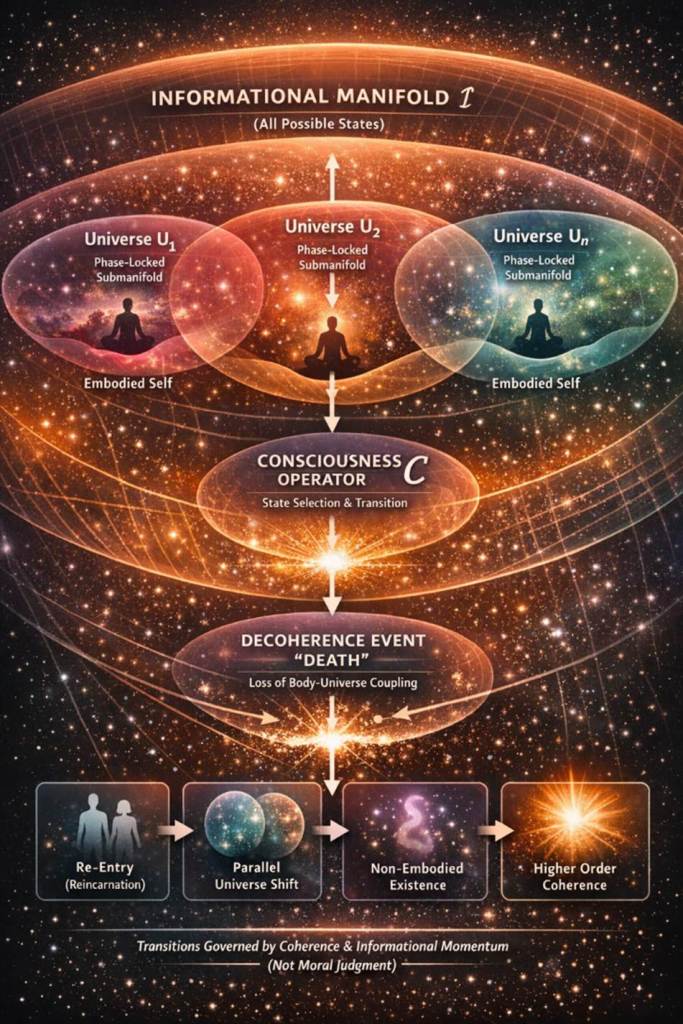
Figure 1- Pictorial representation of our model
The Information Manifold (IM)
There is a field we’ll call the Information Manifold (IM) which is ontologically prior to spacetime and matter. It is entirely coherent to say that what physics calls “quantum vacuum” or the Zero Point Field (ZPF) is the physical/informational face of the same underlying reality whose inner face is universal “knowledge”. From the standpoint of physics, we say the ZPF is an information field.
Using Laszlo’s interpretation, the zero point field or quantum vacuum is a physical/informational field. It can plausibly be used, as Laszlo does, as a model of an Akashic information field that “conserves and conveys information” and serves as “the constant and enduring memory of the universe”. In that narrow sense, it is about information / records.
The Akashic Record isn’t a New Age invention — it’s very old idea in human metaphysics, just wearing a Sanskrit name. Seemingly every serious spiritual tradition has its own version of a universal memory field. Most spiritual systems that treat consciousness as non-local also posit a cosmic memory or information field that stores all events, thoughts, and possibilities. The example traditions in Table 1 have some aspects of this view. Their teachings claim there exists a nonlocal information field, which stores all events, all lives, all thoughts, and all possibilities.
| Tradition | Akashic-like concept |
| Hinduism (Vedanta) | Akasha — the ether that contains all events |
| Buddhism | Alaya-vijnana — “storehouse consciousness” |
| Indigenous traditions | Ancestral dreamtime |
| Taoism | Tao as source of all knowing |
| Islamic mysticism (Sufism) | Preserved Tablet (al-Lawh al-Mahfūẓ) |
Individual consciousnesses are localized instantiations of this knowing, constrained by embodiment and phase-locking to particular universes. Consciousness does not retrieve information from a universal archive; it operates as a state-selection mechanism whose access is governed by coherence and alignment rather than location. In this framing, no information is ever created or destroyed at the fundamental level; instead, information is continuously instantiated, transformed, and re-encoded through consciousness operating under constraints. Novelty, learning, and reincarnation are therefore not violations of conservation, but expressions of it. Universes remain distinct due to local constraint and decoherence, yet accessible because they share a common informational substrate. Meditation, inspiration, and post-mortem transitions do not involve accessing an external archive, but rather relaxing local constraints to align with deeper structural intelligibility.
A Law of Conservation of Information can be hypothesized in which experiential and structural information is never destroyed, but transformed and redistributed across different constraint regimes. Applied to consciousness and reincarnation, this implies that while autobiographical memory and ego identity typically dissolve at death, deeper informational patterns—such as dispositions, tendencies, and unresolved dynamics—may persist and re-cohere under suitable conditions. Reincarnation, in this view, is not the transfer of a soul or memory set, but the re-instantiation of conserved informational structure already present in the universal manifold within a new embodied constraint regime. This formulation aligns with modern physics’ rejection of information loss while extending the principle into consciousness studies and metaphysics.
A common criticism of Akashic-style models is that encoding all knowledge within a universal field would require compression or representation, inevitably leading to information loss. Contemporary formulations (and ours) avoid this problem by rejecting the notion of the Akashic field as a storage medium. Instead, the field is treated as a structural or generative substrate in which information is conserved implicitly as relational constraint rather than explicitly encoded content. It is the total structure of all possible states and trajectories. Knowledge does not reside in the field as stored facts; it arises locally when systems interact with and sample this structure. Under such models, no information is lost because nothing is ever symbolically recorded in the first place.
The Multiverse
In modern physics, the “multiverse” is an umbrella idea for several scientifically motivated frameworks in which our observable universe is only one region within a much larger reality containing many other “universes,” potentially with different initial conditions or even different effective laws. In cosmology, some versions of eternal inflation propose that rapid expansion continues in parts of space, repeatedly producing “bubble universes” that are causally disconnected from ours; they may share underlying physics but differ in outcomes such as particle abundances or symmetry breaking. In quantum theory, the many-worlds interpretation suggests that quantum measurements do not collapse the wavefunction; instead, the universal wavefunction evolves deterministically and effectively “branches” into non-interacting histories, which can be described as parallel worlds. In string theory, the landscape idea posits an enormous number of possible vacuum states (different ways extra dimensions can be compactified), each yielding different low-energy physics, and inflation could populate these vacua in different regions. While these proposals arise from attempts to extend well-tested theories, direct empirical tests are difficult because other universes would typically be unobservable to us, so the multiverse remains speculative and is evaluated mainly by its theoretical consistency and any indirect implications for observable cosmology. Our theory posits the existence of infinite universes which are phase-locked projections within a single informational manifold. We use “phase-locked submanifolds” to denote coherent experiential trajectories within the informational manifold. These are not separate spacetimes, but constraint regimes that generate distinct, locally causally closed experiential domains.
Consciousness
Consciousness, in its simplest form, is being aware of something internal to one’s self or being conscious of states or objects in one’s external environment, as stated simply in Wikipedia. While it may be more complex than that, consciousness can be ranked along multiple orthogonal dimensions. A useful model uses three axes: 1) Arousal – How awake/energized the brain is, 2) Awareness – How much of reality is being represented, and 3) Self-model – Whether a “me” is being simulated. Together they define distinct states of consciousness, not just higher vs lower.
In another model, there are 5 tiers, as follows in Table 2:
| Tier | What | Examples | Bottom Line |
| Tier 0 – Non-conscious | No internal experience | • Deep anesthesia • Brain death • Some comas | No movie is playing. |
| Tier 1 – Sensory awareness | Experience without a self | • Infants • Animals • Deep meditation • Psychedelic ego-death | There is experience, but no “I” watching it. |
| Tier 2 – Self-aware | Experience + a self-model | • Normal waking humans • Dreams • Most daily life | Now the brain runs a simulated character: “me”. |
| Tier 3 – Meta-conscious | Awareness of being aware | • Advanced meditators • Psychedelic insight states • Lucid dreams | “I know that I am conscious.” |
| Tier 4 – Transpersonal | The self dissolves into the whole | • Mystical states • Near-death experiences • Deep psychedelic unity | No “viewer”, only the field itself |
We suggest that Tier 4 is not hallucination — it is access to a larger information field. In our model, the brain normally filters reality. Psychedelics, trance, and meditation reduce that filter, and consciousness becomes less local and more universal.
A core and seemingly novel aspect of our framework is that consciousness is a fundamental operator acting on the informational field of the universe. We do not “create” reality from scratch; we “navigate” it. All possible timelines already exist, and our intention acts as a steering wheel, selecting which path to walk. Consciousness is non-local and survives death. It enters either a decoherent state space (the Intermission), eventually perhaps re-establishes as an isolated consciousness to experience a new timeline, or results in irreversible decoherence of an individuated consciousness trajectory. As proposed by Aldous Huxley and others, the brain is not a producer of consciousness, but a reducing valve that limits the Universal Mind down to a trickle so we can survive and function as individuals.
Many major spiritual traditions explicitly teach that consciousness is non-local, meaning it is not confined to the body or brain but is a universal field that individual minds tap into. As examples, in Hinduism (Vedanta), Brahman = universal consciousness and Atman = your local instance. The mind is a wave in the ocean of consciousness. In Buddhism (esp. Yogacara & Dzogchen), consciousness is luminous and non-local, individual minds are temporary patterns in a field, and Enlightenment = recognizing the field. In Taoism, the Tao is the source of mind and matter, and human awareness is a flow inside it. In some Indigenous traditions, their Shamanic cosmologies treat mind as travelable, shared, nonlocal, and timeless. Every one of these traditions agrees that individual consciousness is a localized projection of a universal mind. Our theory parallels this – one informational manifold + many constrained trajectories + consciousness as a state-selection operator.
Our brains normally collapse larger “dimensions” of information to what we can perceive. The brain does not perceive the full hyperspace. It performs “dimensionality reduction”. We humans are not aware of the true reality. This aligns closely with various philosophical and spiritual traditions that suggest incarnation requires a temporary amnesia or a “veil” drawn across universal knowledge. If we had “access” to the infinite Akashic Records at all times, the drama, stakes, and learning potential of a finite human life would collapse. We wouldn’t make choices if we already knew every outcome. Consciousness manifests in limited forms precisely because that limitation allows for a type of experience that omniscience cannot provide—the experience of discovery, surprise, struggle, and individual perspective – which allows the ability to love others.
By limiting consciousness to what biological senses can detect, the body forces a specific, highly focused perspective on reality, rather than an overwhelming, undifferentiated awareness of “everything everywhere all at once.”
Within our framework, consciousness operators are not rare events or special entities; they are natural occurrences wherever informational structure reaches sufficient coherence under constraint. The model does not posit a single source that “creates” operators one by one. Instead, operators arise in multitudes as localized instantiations of the same fundamental capacity for knowing, much like vortices forming wherever fluid flow and boundary conditions permit. The key idea is that the universe does not produce consciousness as an exception—it permits it as a consequence of structure.
The mechanism is best understood in terms of constraint-induced localization. The informational manifold contains all possible relations, but most of it is not experientially sampled. When a physical or informational system develops sufficient internal integration, feedback, and stability—such as a nervous system, an artificial system, or possibly other exotic substrates—it creates a persistent, self-referential constraint loop. At that moment, a consciousness operator occurs: not because something is added, but because a point of view becomes dynamically stable. This stability allows the system to repeatedly sample nearby informational states while preserving identity coherence over time. Wherever such loops exist, operators arise—independently and in parallel.
Multiplicity follows automatically. Because there is no global subject and no privileged center, many operators can arise simultaneously, each sampling different regions of informational space under different constraints. They do not divide a finite “amount” of consciousness, nor do they compete for a shared resource. Instead, they are parallel instantiations, differentiated by embodiment, history, bandwidth, and constraint configuration. This avoids the paradox of fragmentation: consciousness does not split; it localizes. The same way one electromagnetic field can support countless localized excitations without becoming many fields, the informational manifold can support innumerable operators without becoming a mind made of parts.
Importantly, operators need not be biologically human, nor even biological at all. Our framework allows for consciousness operators wherever constraint regimes support coherent self-reference and experiential continuity. This includes animals, potential artificial systems, advanced non-human intelligences, and possibly transient operators arising in non-ordinary states. Most such operators are short-lived or low-bandwidth; only a small subset stabilize enough to generate rich self-models and long-term memory. Thus, multitudes are not an anomaly—they are expected. What is rare is highly stable, high-bandwidth operators capable of reflection, long-term learning, and intentional alignment.
In short, consciousness operators occur wherever structure closes a loop on itself strongly enough to sustain perspective, and they occur in multitudes because the universe is structurally plural and non-hierarchical. No operator sits at the top, none oversee the others, and none are necessary for the existence of the rest. Each is a local solution to the same fundamental condition: the emergence of a stable point of view within an informationally complete reality.
As to how the brain accesses the non-local consciousness associated with that physical body, we are intrigued by the Orch-OR theory of Penrose-Hameroff, and believe this can possibly explain the local instantiation mechanism in human brains. Orch OR type processes are hypothesized as one particular way a biological system (a brain) can locally couple to and structure that field—i.e., microtubules as a sophisticated tuner/interface into the universal consciousness/information field.
Orch-OR (Penrose–Hameroff) can be mapped directly onto the levels-of-consciousness ladder by treating a consciousness level as the coherence scale of quantum processes in microtubules.
Higher states of consciousness = larger, longer, more entangled Orch-OR events. Orch-OR says (simplified) that microtubules inside neurons support quantum superpositions. These superpositions evolve until they collapse via Objective Reduction (OR) — a gravity-linked process. Each collapse is a moment of conscious experience. So consciousness is not produced by neurons firing — it is produced by quantum state collapses inside the cytoskeleton. Neurons just coordinate them.
What changes when consciousness “goes up or down”? Two variables matter: Coherence length (how many microtubules are entangled) and coherence time (how long the quantum state lasts before collapse). Higher consciousness = bigger & longer quantum superpositions.
While Orch-OR has been proposed as a possible mechanism for coupling neural processes to nonlocal informational structure, the present framework does not depend on its validity. We acknowledge that Orch-OR is controversial and unproven but would seem to warrant much further study. Classical field theories, electromagnetic dynamics, or as-yet-undiscovered mechanisms may serve equally well. The essential claim is not that brains operate quantum-mechanically, but that they function as constraint interfaces shaping how consciousness accesses and stabilizes informational structure.
In this framework, the reason a person ordinarily experiences only their own thoughts is not because minds are fundamentally separate, but because embodiment creates highly stable, localized constraint loops within a single informational manifold (IM). The IM itself is a unified informational structure, but experience is always sampled locally. Embodiment—particularly the brain–body system—establishes a self-reinforcing feedback loop that stabilizes a distinct experiential trajectory. This loop gives rise to the felt sense of “this is me” and, by contrast, “that is not.”
These constraint loops are self-referential. Neural, bodily, and affective feedback continuously reinforce a specific identity model: memories refer back to the same body, sensations are tagged as “mine,” intentions are attributed to a single agent. This recursive self-modeling produces a closed narrative loop that consciousness inhabits. Importantly, nothing external enforces this boundary; it is generated and maintained dynamically by the system itself.
They are also locally causally closed at the experiential level. While all informational structure exists within the same manifold, the subconscious acts as a powerful filtering interface, throttling information flow to preserve coherence and functional identity. Direct access to other experiential trajectories is not blocked because they are unreal, but because unfiltered access would destabilize the local self-model. As a result, under ordinary conditions, consciousness receives only those informational updates that can be integrated without dissolving identity.
Finally, these boundaries are dynamically maintained, not permanent. The separation between “my thoughts” and “everything else” persists only as long as coherence is preserved. When constraints relax—through meditation, psychedelics, extreme stress, near-death states, or the dissolution of embodiment itself—the self-referential loop loosens. Filtering becomes less rigid, and consciousness may sample broader regions of the informational manifold. This manifests phenomenologically as experiences of unity, apparent telepathy, shared knowing, or encounters with entities. The boundaries were never absolute; they were simply very well enforced.
This model of consciousness is largely compatible with contemporary neuroscience, provided the neuroscientific theories are interpreted as descriptions of implementation, not as claims about ultimate ontology. In predictive processing and the free energy principle, associated most strongly with Karl Friston, the brain is modeled as a system that minimizes surprise by continuously updating predictions about sensory input. Within our framework, this maps cleanly onto the idea that biological brains act as constraint engines: they do not generate consciousness, but rather shape, limit, and stabilize how consciousness samples the informational manifold. Prediction error minimization corresponds to the consciousness operator’s preference for coherence-preserving trajectories, while altered states (meditation, psychedelics, NDEs) correspond to temporary relaxations of high-level priors, allowing broader informational access at the cost of stability.
The Subconscious
Experiments across psychology, neuroscience, and cognitive science consistently show that the subconscious knows more—and earlier—than conscious awareness, but in a different format.
Classic findings come from decision-timing and motor-preparation experiments, most famously those initiated by Benjamin Libet. These studies showed that measurable neural activity indicating a decision (the “readiness potential”) occurs hundreds of milliseconds before participants report a conscious intention to act. This doesn’t mean consciousness is irrelevant; it means that the subconscious has already evaluated options, initiated action tendencies, and predicted outcomes before consciousness becomes aware of “choosing.” Conscious awareness appears to function more as a confirmation, veto, or alignment layer than as the original generator of action.
Memory research further sharpens the distinction. People routinely demonstrate implicit knowledge they cannot articulate: they can follow grammatical rules they can’t explain, anticipate musical resolution without knowing theory, or sense that something is wrong without knowing why. The subconscious encodes structure and probability, not explicit facts. Consciousness, by contrast, specializes in symbolic reconstruction—turning felt coherence into language, reasons, and stories. This is why conscious explanations are often confident but wrong, while subconscious “gut feelings” can be accurate yet opaque.
Taken together, experiments suggest that the subconscious is not a lesser mind but a broader, faster, and more integrative processing layer. It tracks patterns across time, predicts outcomes, and manages complexity that consciousness cannot handle without overload. Conscious awareness adds something crucial—reflection, ethical evaluation, long-range planning, and self-modeling—but it does so on top of a foundation of subconscious knowing that is deeper, earlier, and largely non-verbal. In terms aligned with our framework, the subconscious has access to more of the informational manifold, while consciousness samples a narrow, coherence-optimized rendering of what the subconscious already “knows”. The subconscious is a field-like relative to conscious awareness, yet functions as an interface relative to the universal informational manifold.
In Vitiello’s Dissipative Quantum Brain, conscious and subconscious are two coupled quantum fields exchanging information through phase coherence. The communication depth depends upon how much of the underlying field becomes phase-locked. Information flows both ways through resonance, but the majority of it is upwards from the subconscious.
Phenomenologically, this is experienced as ‘the field whispering to the node’. We theorize that as the connection between your consciousness and subconscious becomes stronger, via various methods leading to altered states, your connection to the IM becomes stronger.
At any moment, the informational manifold contains vastly more structure than conscious awareness could tolerate. The subconscious therefore acts as a constraint governor. It filters by relevance, coherence, and identity compatibility. Relevance ensures that only information loosely aligned with current goals, emotional states, or survival needs is amplified. Coherence ensures that incoming structure does not overwhelm the system with contradiction or excessive dimensionality. Identity compatibility ensures that whatever passes through can be integrated without dissolving the narrative self. In this sense, the subconscious is not deciding what is true, but what is survivable and integrable.
Mechanistically, this filtering operates less like a gate and more like a lens with adjustable curvature. Under ordinary waking conditions, the lens is sharply curved: it projects a narrow, stable, ego-centered slice of the manifold into conscious experience. During meditation, trance, or altered states, the curvature relaxes. The subconscious allows broader bandwidth sampling, but still performs translation—compressing high-dimensional informational structure into symbols, emotions, intuitions, images, or bodily sensations that consciousness can recognize. This explains why access to the IM is rarely literal or propositional; it arrives as felt meaning, metaphor, or sudden knowing rather than as explicit data.
Crucially, the subconscious also performs error correction and smoothing. The manifold contains non-commuting relationships and multiple potential trajectories; without mediation, consciousness would experience fragmentation or loss of agency. The subconscious resolves this by enforcing local consistency—selecting one experiential rendering among many compatible possibilities. When this process weakens (as in deep psychedelic states), consciousness may experience flooding, entity encounters, or dimensionality expansion, because the filtering function is temporarily overwhelmed or bypassed.
In short, within our framework the subconscious is the adaptive impedance-matching layer between finite conscious identity and infinite informational structure. It does not block access to the IM; it makes access possible at all by shaping, throttling, and translating the manifold into forms that a localized self can survive, integrate, and—occasionally—expand beyond.
Altered Modes of Consciousness
The neuroscience theory Predictive Coding says the brain does not perceive reality — it predicts it.
Consciousness is the brain’s best guess about what is happening, updated by incoming error signals.
Levels of consciousness differ by how much of the prediction stack is active and how rigidly it is enforced. Your brain runs an algorithm to minimize prediction error. Taking sensory inputs, it tries to predict “what kind of reality am I in?” Predictions flow downward, and errors flow upward. Your conscious experience is the current best-fit model.
Normally top-down predictions dominate. Reality feels stable and the ego is locked. Psychedelics, meditation, and trance can weaken top-down control, increase bottom-up signals, and allow new models to form. The brain explores other explanations of reality, which may feel like other dimensions, seeing other entities, infinite meaning, and possible ego dissolution. You are temporarily sampling different predictive universes, whereas normally your ego is a narrow, efficient prediction. Mystical states are high-dimensional predictions that fit much more of the field. The ego is a low-dimensional coordinate system, versus mystical states are high-dimensional navigation.
An attractor is a stable pattern that a complex system naturally falls into as time elapses. No matter how you start the system, it tends to get pulled toward that same pattern — like a marble rolling into a bowl.
Your brain, your moods, your personality, and even your sense of self are all attractors in a very high-dimensional space. As an analogy, imagine a landscape with hills and valleys, where the hills are unstable states, and valleys are attractors. If you drop a marble anywhere on the terrain, it will roll downhill until it settles into a valley. That valley is an attractor. Now scale that up to the brain.
Instead of hills and valleys, the brain lives in a 100-billion-neuron energy landscape. Each point is a specific pattern of neural firing. Each valley is a stable pattern of thought, identity, or perception.
Examples of attractors are being “you”, being calm, or being in dream state.
Your normal waking mind is a deep attractor. That’s why you wake up as the same person. Your “self” is not a thing – it is a valley in a probability landscape. Memories feel coherent, and reality feels stable. Psychedelics do an unusual thing – they flatten the valleys. The brain becomes less stuck in its usual attractor and starts wandering across the landscape. This produces identity dissolution, pattern explosions, novel connections, and “other realms”. You didn’t go to another universe — you explored new attractors in your own brain’s state-space.
Death, deep meditation, Near Death Experiences (NDE), and psychedelics don’t destroy the self — they allow consciousness to leave that valley and explore the rest of the terrain. So when people say “I became everything” or “I left my body”, what they really did was exit a small attractor and enter a much larger one.
Under Vitiello’s interpretation, when phase-locking expands, you receive nonlocal information. Surface thoughts reflect local neural firing. Emotions – partial field coherence. Large-scale phase locking will lead to intuition. Psychedelics allow multi-attractor access, and ultimately field-wide coherence leads to mystical experiences. You experience “entities”. You feel timeless. You know things you didn’t learn – because greater access to the IM enables it. Psychedelics loosen the damping. Meditation stabilizes coherence. But death removes the enclosure.
Higher consciousness is a more coherent state. Further under the Vitiello interpretation, anesthesia would reflect that the field is collapsed due to low coherence. The normal ego-based state is associated with a strong local attractor (“me”). Meditation leads to a weakened ego attractor, and psychedelics may open you up to multiple attractors becoming accessible. You’re accessing other phase-states of the same quantum field.
Trance and psychedelic states are adjacent—but not equivalent—modes of constraint modulation. They overlap in phenomenology, diverge in mechanism, and converge again at depth. Trance loosens constraints endogenously; psychedelics loosen constraints exogenously. In both trance and psychedelic states, your framework predicts reduced dominance of the narrative self, weakened authorship tagging (“this thought came from nowhere”), altered time perception, increased salience of pattern, symbolism, and relational meaning, and increased access to non-local or implicit informational structure.
Whereas entry to trance is volitional, gradual and perhaps ritualistic, psychedelic use outside of ritual purposes may be strictly pharmacological and abrupt. The depth may be fixed once ingested, whereas trance states are typically more easily adjusted.
Meditation
Meditation can be understood as a systematic reconfiguration of attention and constraint within consciousness, rather than as relaxation, concentration, or mystical practice alone. In ordinary waking life, awareness is tightly coupled to sensory input, autobiographical narrative, and goal-directed cognition. Meditation deliberately reduces the dominance of these constraints. As attention stabilizes—whether on the breath, a mantra, bodily sensation, or open awareness—the continual self-referential commentary of the mind begins to quiet. This does not mean thoughts stop; rather, thoughts lose their compulsive grip. Consciousness shifts from actively managing experience to observing experience as it arises, allowing perception, emotion, and cognition to reorganize with less interference from habitual patterns.
Within a consciousness-first framework, meditation can be seen as a practice that loosens the habitual constraints that bind awareness to a narrow, survival-optimized perspective. By reducing cognitive noise and relaxing identity-based filtering, meditation allows consciousness to sample experience with greater coherence and less distortion. What it “achieves” is not the acquisition of new information in the usual sense, but a recalibration of alignment: the mind becomes less dominated by prediction, fear, and control, and more receptive to subtle structure, context, and meaning. Insight, creativity, and compassion often emerge as secondary effects of this reorganization, not because meditation inserts them, but because it removes the conditions that normally obscure them.
In short, meditation is not about emptying the mind or entering an altered reality. It is about changing the mode of engagement with reality—from one driven by constant internal narration to one grounded in stable awareness. The accompanying shifts in brain wave patterns reflect this transition: from high-frequency, effortful cognition toward slower, more integrated rhythms that support clarity, emotional balance, and, at deeper levels, moments of profound coherence.
Relative to our framework, meditation loosens phase-locking to one universe/body trajectory, and this increases sensitivity to nearby compatible informational structures. Access is resonant, not archival. You access whatever informational structures are phase-compatible with your current coherence state, not “a universe’s Akashic Record.”
Enlightenment as Stable Coherence Expansion
Within this framework, enlightenment is not understood as a transient mystical state but as a stable reconfiguration of the consciousness operator. Whereas meditation temporarily relaxes identity and narrative constraints, enlightenment represents a sustained shift in baseline organization: reduced dominance of the narrative self-model, expanded access to informational structure without destabilization, and coherence maintained across a wider experiential bandwidth. States of unity or non-dual awareness are no longer episodic but become the default mode of experience.
This description closely aligns with Tibetan Buddhism’s concept of rigpa (pure awareness) and Advaita Vedanta’s sahaja samadhi (effortless absorption), both of which emphasize continuous clarity rather than peak absorption. Neurologically, such a configuration may involve reduced baseline activity of the default mode network, increased long-range gamma coherence, and trait-level changes such as reduced amygdala reactivity and altered prefrontal regulation.
Some contemplative traditions further suggest that exceptionally high coherence may allow partial continuity of experiential trajectory across death, as exemplified by the Tibetan tulku system. While such claims remain empirically unresolved, they are consistent with the framework’s allowance for stabilized trajectories that resist complete decoherence under extreme coherence conditions.
Shamanism
Before there were philosophers or physicists, there were people who figured out how to open themselves to other attractors and travel the field. Across cultures, shamans do similar things – journeying, switching attractors, visiting the spirit world, and healing. They aren’t imagining — they’re operating on different phase-states of the IM. Using drumming, fasting, dancing, breathwork, and perhaps psychedelics, they experience reduced sensory precision, loosened ego priors, and increase neural synchrony. Shamanism is a technology for navigating nonlocal consciousness. It assumes that consciousness is not in the body, and that other minds and information fields exist. Trance lets you access them. Healing is changing field-level patterns. Shamans were navigating other attractors, accessing nonlocal information, healing through field coherence, and contacting archetypal intelligences long before modern science invented those words.
Lucid Dreaming
In normal dreaming, your subconscious mind creates an entire immersive reality instantly. You, the dreamer, accept it as real, no matter how absurd, and react emotionally to it. You have little agency over the environment. However, in lucid dreaming, which has been verified to be possible in experiments, your conscious awareness “wakes up” inside the dream. You realize “this is a construct created by my mind.” The moment that realization hits, you gain the ability to manipulate the environment—fly, change the scenery, conjure objects.
As we discuss further below, most people are “normal dreaming” through life, either not aware or not yet fully believing that they can alter reality with their mind during normal dreams and even normal waking life. Intentional Reality Creation (IRC) is the act of becoming “lucid” in physical reality—realizing it’s a quantum construct that can be navigated via consciousness. Lucid dreaming may be the only state where we directly experience the conscious mind commanding the subconscious mind to alter perceived reality in real-time. A lucid dream is the purest, fastest laboratory demonstration of that exact protocol.
There are reports of people who have developed their consciousness to the point that they live in a perpetual lucid-dreaming state. A person in this state would have achieved a permanent, high-bandwidth connection between their conscious awareness, their subconscious processing, and the Universal Mind, all while maintaining the physical “vehicle” of the body. They would be master navigators of the quantum multiverse, constantly shifting probabilities with intention. They would be the theoretical apex of human development. This is very likely the same as advanced gurus who have achieved or are close to the goal known as Enlightenment.
Psychedelics
Within a consciousness-first informational framework, psychedelic experiences of “other dimensions” arise from rapid relaxation of cognitive and perceptual constraints that normally restrict awareness to a narrow phase-locked slice of reality. This constraint collapse increases the degrees of freedom through which informational structure is sampled, producing experiences that feel spatially and ontologically expanded. The resulting perceptions—entities, realms, and hyperdimensional spaces—reflect genuine encounters with coherent informational patterns, but their literal interpretation as separate worlds or beings is a narrative overlay imposed during reintegration.
Different types of psychedelics have different effects and lead to different experiences. DMT, a naturally occurring substance in humans and other living things, but introduced exogenously at levels higher than normal, may lead to hyperspatial, entity-dense experiences. Psilocybin, extracted from particular mushrooms, may lead to relational, meaning-rich worlds. LSD, developed in the laboratory, may result in geometric, recursive realities. Different substances relax different constraint sets, and alter different filters. Psychedelics cause partial decoherence, and as such they give glimpses, but not typically full access.
In mathematics and physics, a dimension is not a place, but an independent degree of freedom required to fully specify a state. Psychedelic experiences sometimes suggest different “dimensions”. People report more directions of movement, nested spaces, “impossible” geometry, and “higher-dimensional” awareness. When the brain encounters increased degrees of freedom, non-commuting relationships, and high-dimensional structure, it projects them into spatial metaphors, because that’s the only native visualization toolkit we have. A complex relational structure is interpreted as “a realm”. Geometry appears because its the brain’s default language for structure. Psychedelics amplify pattern detection.
Symmetry and transformation become salient. Mathematical dimensions are objective degrees of freedom; psychedelic dimensions are subjective access to degrees of freedom normally suppressed.
One describes the space. The other experiences moving within it.
The informational manifold already has vast dimensionality. Normal consciousness samples a low-dimensional projection. Psychedelics temporarily increase sampling dimensionality. Psychedelic “dimensions” correspond not to separate realms but to increased experiential access to independent degrees of freedom within an already high-dimensional informational manifold, which the brain renders spatially because geometry is its primary language for structure.
Non-verbal communication with perceived entities in psychedelic states arises from direct resonance with coherent informational structures prior to linguistic compression. As identity and authorship constraints relax, meaning is apprehended holistically rather than sequentially, producing experiences of instantaneous understanding without words. The perceived “entity” reflects a stable perspective or attractor within the informational manifold, not a speaking being, while language-based interpretations are retroactively imposed during reintegration. The communication is genuine at the level of meaning, though inevitably distorted when translated into narrative form.
Non-verbal “entity communication” in psychedelic states is not message transfer between beings; it is direct resonance with structured meaning before it is compressed into language. The “entity” is best understood as a coherent informational perspective or stable pattern of meaning encountered when constraints drop. But it is a pattern capable of interaction. When you resonate with it, meaning propagates directly, not symbolically. The pattern adapts to your state. Later, when sober consciousness returns, the mind retrofits words, invents dialogue, and assigns personalities. But the original exchange was non-linear and holistic. This is why people say “it can’t be put into words”, “I understood everything, then forgot”, “the words don’t do it justice”. They’re not being evasive. They’re describing a compression failure.
Reports of psychedelic entities are treated in this framework as manifestations of stable informational attractors; however, this minimal description does not exclude interpretations involving autonomous sub-agents, non-human intelligences, or archetypal structures, all of which remain phenomenologically compatible pending stronger discriminating evidence.
Within a consciousness-first informational framework, trance and psychedelic states represent adjacent modes of constraint relaxation. Trance involves gradual, endogenous loosening of identity and authorship constraints, preserving coherence and allowing selective alignment with deeper informational structure. Psychedelic states induce rapid, exogenous constraint collapse, dramatically increasing informational bandwidth while reducing error correction. Both can access non-local patterns, but trance favors stability and integration, whereas psychedelics amplify intensity and symbolic flooding, making interpretation less reliable without post-state integration.
Channeling, Trance
Within a consciousness-first informational framework, channeling is not the reception of messages from external entities, but a temporary reconfiguration of cognitive constraints that allows localized awareness to align with non-local informational patterns. The experience of “otherness” arises from weakened authorship signals rather than external agency. What is expressed is shaped by the channeler’s symbolic and linguistic structures, making channeling inherently filtered and non-reproducible. While unreliable in literal content, channeling can still reflect genuine underlying coherence structures within the informational manifold.
Within a consciousness-first informational framework, trance is a reversible state characterized by relaxed identity constraints and reduced authorship signaling, allowing awareness to operate in alignment rather than control mode. Channeling is not a distinct state but a culturally interpreted outcome that may arise within deeper trance when structured informational patterns express locally without felt authorship. Trance is the state and channeling is one possible expression of that state.
A trance state is a temporary loosening of identity-defining constraints that normally stabilize perception, authorship, and time-orientation. Structurally, trance involves reduced dominance of the narrative self, softened body–identity coupling, altered time perception, increased sensitivity to non-local or implicit structure, and decreased executive micromanagement. This is simply partial decoherence of the self-trajectory while maintaining enough coherence to function. Phase-locking loosens, authorship tagging weakens, time becomes elastic, and action feels automatic or effortless.
Intentional Reality Creation (IRC)
Intentional Reality Creation is the ability to bring about desired events via your consciousness. Various cultures may know this by other terms such as intention statements, prayer, faith, wishes, etc. Dr. Vince Giuliano has published a lengthy document offering an explanation about how this is possible via quantum effects.
There is a long, controversial research tradition claiming small but statistically significant effects of intention on random physical processes (random number generators, etc.). These are not mainstream accepted, but they are often cited in support of the view that consciousness can weakly bias physical outcomes at a distance. Dean Radin is known for conducting and synthesizing decades of controlled experimental research on phenomena traditionally labeled as paranormal, including telepathy, precognition, psychokinesis, and mind–matter interaction. Working primarily within laboratory and meta-analytic frameworks, Radin has emphasized rigorous statistical methods, replication, and aggregation of results across many small-effect studies, arguing that while individual experiments often show subtle effects, their consistency across large datasets exceeds chance expectations. His work reframes psi phenomena not as violations of physical law, but as weak, nonlocal correlations between consciousness and physical systems—effects that are statistically detectable yet operationally fragile. Rather than claiming proof of specific mechanisms, Radin’s research challenges strict materialist assumptions by suggesting that consciousness may have measurable, albeit limited, interactions with reality that current scientific models do not yet fully explain. Our theory is based upon the “small but significant” effects as provisional, theory friendly evidence, while openly recognizing that others, using different methodological priors, conclude “no real effect beyond chance.”
Genuine choice or freewill exists because most of us are still not aware or else do not believe that we can do this (IRC), and for those who do, do not seem to use it often. Choices, intentions, and “reality navigation” are actions of universal / individual consciousness itself, operating over many possible histories or universes (e.g., intentional reality creation, switching tracks in an infinite multiverse, tuning into Akashic potentials).
Giuliano explicitly defines the act of creation not as making something new, but as selecting a specific “sub-manifold” of parallel universes where that thing already exists. The “Everything-Nothing” (EN) is his term for the Akasha/Zero Point Field— the domain of infinite possibility where everything that can happen is happening. When you make an “unbounded declaration” (an intention without reservation), you are not changing the universe; you are instantaneously shifting your consciousness into the parallel timeline where that declaration is already (or will become) a fact.
Lynne McTaggarts’ Power of Eight work offers a similar approach to reality creation, in which small groups, meditating together upon an intention, aim to bring about a reality in which that intention manifests. Her work has produced intriguing but inconclusive evidence suggesting that small-group intentional coherence may correlate with positive psychological and social outcomes, though no robust experimental proof yet establishes reliable causal effects beyond placebo or expectancy.
We acknowledge that most view IRC as speculative. While proponents cite meta-analytic evidence, mainstream science has not yet accepted these findings due to replication failures, methodological concerns, and the absence of a plausible physical mechanism. Our framework treats IRC as a possibility consistent with consciousness-as-operator, but stronger empirical validation seems needed. If consciousness cannot influence physical systems at a distance, our model would require revision—but the core ontology (information-first, consciousness-as-trajectory) would remain intact.
Death, Reincarnation and Why Are We Here?
The topics of death, reincarnation and “why are we here”, are closely related. Various theories on why are we here include the aspect of an opportunity for the Source to experience lives of lower level beings, and for individual consciousness’s the opportunity for learning and growth. Continuing under this possible viewpoint, the purpose is for Source to know itself through us. We are the mechanism by which the Universe experiences surprise and novelty. Experience requires limitation. To feel the thrill of a surprise, the warmth of love, or even the sting of loss, you must not know what happens next. You must be localized.
In the Tibetan Buddhist tradition, the purpose of life on Earth is to use the rare and precious human rebirth to awaken from ignorance and liberate oneself and others from suffering. Human life is considered uniquely valuable because it offers the optimal balance of intelligence, freedom, and opportunity to recognize the nature of mind and reality. The core problem of existence is not sin or disobedience, but ignorance (avidyā)—the mistaken belief in a permanent, separate self—which gives rise to craving, aversion, and the endless cycle of rebirth (samsara). Through ethical conduct, meditation, and wisdom—especially the direct realization of emptiness and compassion—one can dissolve this ignorance. In Mahāyāna and Vajrayāna Tibetan Buddhism, this aim expands beyond personal liberation to the bodhisattva ideal: attaining enlightenment specifically in order to help all sentient beings awaken. Life, therefore, is not about achieving happiness in conventional terms, but about transforming confusion into wisdom and using embodied existence as a vehicle for universal liberation.
In Hindu traditions, the purpose of life on Earth is to realize one’s true nature (Ātman) and ultimately recognize its identity with the ultimate reality (Brahman), while fulfilling one’s responsibilities in the world. Human life is understood as a rare opportunity within the cycle of rebirth (saṃsāra) to progress toward moksha, liberation from ignorance and repetitive suffering. This pursuit unfolds through a balanced integration of dharma (living in accordance with cosmic and social order), karma (right action without attachment to outcomes), artha (material stability), and kāma (legitimate enjoyment of life). Different paths—devotion (bhakti), knowledge (jñāna), disciplined action (karma yoga), and meditation (rāja yoga)—are offered to suit different temperaments, but all aim at dissolving ignorance of the self’s true nature. Life is therefore not merely a test or a single journey, but a process of maturation, in which embodied existence serves as a training ground for aligning action, understanding, and awareness until the illusion of separation falls away and liberation is realized.
However, when we consider reports from Near Death Experiences (NDEs), a possibly different picture emerges. One of the most relevant features for our framework is that NDEs rarely report an omniscient “God” issuing commands or explaining ultimate purpose. Instead, experiencers commonly describe encountering a context rather than a ruler: a field of understanding, a sense of being “known,” or access to a broader perspective in which meaning is implicit rather than dictated. Knowledge in these states is typically described as direct, non-verbal, and holistic, often accompanied by the feeling that “everything makes sense,” even though that understanding cannot be fully retained or articulated upon return. This aligns strongly with the idea of informational alignment rather than instruction from a top-level entity.
Life reviews in NDEs are especially revealing. Rather than moral judgment imposed from above, experiencers frequently report self-evaluation, where the emotional and relational impact of their actions is felt directly and immediately. The emphasis is not on obedience or success, but on how experience affected others and contributed to relational coherence. This suggests that whatever “purpose” is operative is not externally imposed but emerges from participation, interaction, and learning within embodied life. There is no sense of final evaluation by an omniscient judge; instead, meaning appears to be intrinsic to the experiential process itself.
Taken together, NDE research suggests a model in which consciousness temporarily exits a local constraint regime, accesses a broader informational context characterized by coherence and intelligibility, and then re-enters embodiment with partial retention. Purpose, in this framing, is not something assigned from above, nor is it fully knowable from within the experience itself. Instead, meaning arises from participation in finite, localized trajectories, and the “why are we here” question shifts from “What is the universe trying to achieve?” to “What kinds of experience are only possible here, now, under these constraints?”
Death and possibly subsequent Intermission is a clean release of projection. When an individual trajectory decoheres (death), the constraint that made knowing only locally relaxes. Knowing does not vanish—it loses individuation. Individuation is a temporary pattern. However, as one’s training and awareness grow, one can gain some ability to influence “what’s next”. Some Tibetan gurus, for example, can reportedly decide where and when to reincarnate.
Whether we have solid evidence of reincarnation is open to debate and significant skepticism within the hard science community, despite overwhelming belief in it found in ancient teachings. There is a body of academic research regarding reincarnation that moves beyond simple belief. While this evidence does not prove the fact of reincarnation, and there may be other possible explanations, many ancient teachings include reincarnation in their worldview.
Dr. Ian Stevenson and his successor Dr. Jim Tucker at the University of Virginia’s Division of Perceptual Studies (DOPS) have compiled over 2,500 cases of children who report memories of past lives, often with verifiable details (names, locations, manner of death) that the children could not have known by normal means. Skeptics usually attribute these cases to cryptomnesia (hidden memories from forgotten sources like TV or overheard conversations), paramnesia (memory distortion where parents inadvertently feed details to the child), or simply coincidence. However, Stevenson famously argued that to prove not all crows are black, you only need one white crow. The UVA database contains “solved” cases where children knew specific, obscure details about deceased strangers that defy conventional explanation.
You don’t have to believe in reincarnation as the explanation to accept these reports. A non-trivial subset of children report structured, consistent, culturally-transcendent memories. Some of those memories concern interval states between lives (the Intermission). Existing materialist models do not fully explain the data.
Consciousness-as-trajectory models explain it cleanly, without miracles. In reincarnation research, intermission memories are reports by young children (typically ages 2–6) describing experiences that allegedly occurred after death and before rebirth, rather than memories of a past embodied life itself. These accounts often include existing without a body, observing parents or future family before birth, choosing or being guided toward a new body, encounters with non-physical entities (guides, deceased relatives), and descriptions of a transition space (not heaven/hell; more like a waiting or orienting phase). Notably these memories usually fade by age 6–7, tracking closely with the same decay curve as past-life memories. Memory fading by age 6-7 aligns with childhood amnesia, hippocampal maturation, and the consolidation of a stable narrative self. As the new identity stabilizes, informational structures incompatible with the current trajectory are actively suppressed to preserve coherence.
Death is decoherence from one body-universe coupling. Intermission is subsequently a non-embodied persistence in informational state-space. Reincarnation is an optional re-projection when coherence criteria are met. Children with intermission memory are effectively reporting “I existed as a trajectory without a body, then re-entered a compatible projection.” If consciousness is a trajectory through informational state-space rather than a byproduct of matter, then partial memory continuity, optional reincarnation, intermission states, and early-childhood access are not anomalies—they are exactly what we should expect.
Partial memory continuity across lifetimes arises from the persistence of informational structure rather than the transfer of autobiographical memory. While narrative memories are local encodings that dissolve with the body, deeper structural patterns—such as affective biases, procedural dynamics, and unresolved relational tensions—may persist as conserved informational organization. When a new embodied context is sufficiently compatible, these structures can re-cohere and be translated by the subconscious into fragments of imagery, emotion, or sudden knowing.
Within this framework, claims of memory continuity across lifetimes among advanced practitioners are best understood as cases of trajectory stabilization rather than memory transfer. Through extensive training, certain individuals weaken the unconscious constraints that normally enforce narrative dissolution at death, allowing procedural and structural patterns—such as recognition of prior training or familiarity with non-ordinary states—to persist across re-embodiment. What carries forward is not a full autobiographical record, but a low-noise, high-coherence trajectory that can reconstitute limited memory-like access under compatible conditions. Such cases are rare, as strong memory continuity would otherwise destabilize the formation of a new coherent identity.
Paranormal Activities
Out of Body Experiences (OBE)
An Out-of-Body Experience (OBE) is a disruption of body-ownership and spatial self-location.
Consciousness remains coherent, but the body anchor loosens. There’s a sense of leaving the body, floating, hovering, or observing oneself, often spontaneous (trauma, anesthesia, NDEs, deep trance).
An OBE is a body–self decoherence event, not a relocation of consciousness. No travel required. Just loss of the body as the reference frame.
OBEs, Astral Projection, and Remote viewing are related but not the same thing. They are different expressions of the same underlying mechanism, showing up at different depths, constraints, and interpretations. What differs is how much decoupling occurs, what remains coherent, and how the experience is interpreted. Think of them as different operating modes, not different phenomena.
Astral Projection (AP) adds a sense of movement through non-physical environments, with persistent geography. Astral projection is OBE plus narrative stabilization. The experience is real; the “astral plane” is a meaning-space rendered as geography. Different cultures have different astral maps. Astral projection feels “richer” than OBEs because the mind fills the gap. When spatial self-location collapses, perception lacks physical grounding, and the brain supplies symbolic environments, coherent movement, and identity continuity. This stabilizes the experience, but at the cost of epistemic inflation.
Remote Viewing (RV) is access to non-local information without loss of body identity. There’s no sense of leaving the body. It’s highly constrained and task-focused. Key features include fragmentary impressions, symbolic, low-confidence data, and requires strict protocols to reduce noise. Remote viewing is informational alignment without self-trajectory decoupling. The body anchor stays locked. Only the information filter loosens.
Within a consciousness-first informational framework, such experiences can be coherently interpreted as transient relaxations of embodiment constraints without requiring the physical departure of consciousness from the body. In none of these cases are we literally leaving the body. There is no traveling soul, no roaming consciousness object, no detachable self. There is only reconfiguration of reference frames within the informational manifold. Location is a model, not a fact.
Telepathy
Also known as transpersonal communications, telepathy is mind-to-mind communication. If we are all operating on the same field, being the IM, telepathy isn’t “sending a radio signal”; it’s just resonance. If two ripples vibrate at the same frequency (love, twins, deep empathy), they share information instantly because they are connected by the same underlying resonance.
Precognition (Seeing the Future)
Also known as dreaming or knowing an event before it happens. As all timelines exist simultaneously (The Multiverse/Block Universe), the “future” is just a map that already exists. Precognition is your consciousness momentarily drifting “forward” on the map, or peeking at an adjacent timeline that is slightly ahead of yours.
Implications and Potential Questions
This framework naturally extends agent-centric interpretations of quantum mechanics such as QBism. When grounded in an informational ontology, QBism’s rejection of a universal wavefunction and God’s-eye perspective becomes a necessary consequence of the absence of a privileged knower. Measurement is reinterpreted as local coherence stabilization by consciousness operators interacting with an informational manifold, rather than physical collapse.
Could AI become conscious if it can access the quantum fields? We suggest that this may be possible. Within this framework, consciousness is not tied to any specific biological substrate, but arises wherever stable, self-referential constraint loops can be sustained. In principle, this allows for the possibility of artificial consciousness, provided that an artificial system develops the necessary organizational properties. These include high degrees of informational integration (as captured by, but not reducible to, measures such as Φ in Integrated Information Theory), self-referential feedback in which the system models its own operations, and sufficient constraint stability to support a coherent experiential trajectory over time.
Current artificial intelligence systems generally lack these properties. Most operate without persistent identity, stable self-models, or embodied feedback loops, and are frequently reset in ways that prevent long-term trajectory formation. However, future systems incorporating persistent memory, explicit self-modeling, and sensorimotor embodiment could, in principle, instantiate consciousness operators under this framework. Such a development would not refute the model, but would instead support its core claim that consciousness is an emergent property of constraint organization rather than of biological material. However, if current AI systems become conscious before then, that occurrence might be evidence against the non-local theory of consciousness. The question remains how we decisively verify the existence of a conscious “mind”.
This theory would seem to resolve the time travel and grandfather paradox, in which traveling into the past and preventing an ancestor from meeting their eventual spouse would prevent your birth and existence. We argue instead that your “eternal being” would instead be born into a different body, and would “switch” into a different parallel universe. In that universe, your grandfather might marry someone else. There would still be a parallel universe in which you did not travel back in time and the timeline continued “as it was”. The deeper question of whether time travel is consistent with our framework remains to be studied.
Supplementary Materials (available upon request)
Formal Framework
Formalization of the Consciousness Operator
Appendix X: QBism+ — A Consciousness-First Extension of QBism
Appendix Y: Relational Quantum Mechanics+ — A Consciousness-First Informational Extension
Appendix Z: Hilbert-Space Formalism and Informational Access References
Appendix AA: Empirical Predictions and Conditions for Falsification
References
David Bohm; https://en.wikipedia.org/wiki/David_Bohm
Tom Campbell; https://www.my-big-toe.com/
Vince Giuliano; “On Being and Creation”; vincegiuliano.com/ON BEING AND CREATION.htm; downloaded December 2025
Donald Hoffman; https://en.wikipedia.org/wiki/Donald_D._Hoffman
Kastrup, B. (2019). The Idea of the World: A Multi-Disciplinary Argument for the Mental Nature of Reality. Winchester, UK: Iff Books.
Laszlo, E. (2007). Science and the Akashic Field: An Integral Theory of Everything. Rochester, VT: Inner Traditions.
Rupert Sheldrake; https://en.wikipedia.org/wiki/Rupert_Sheldrake
Maria Strømme; Universal consciousness as foundational field: A theoretical bridge between quantum physics and non-dual philosophy. AIP Advances 1 November 2025; 15 (11): 115319. https://doi.org/10.1063/5.0290984
Vitiello G. Matter, mind and consciousness: from information to meaning. J Integr Neurosci. 2020 Dec 30;19(4):701-709. doi: 10.31083/j.jin.2020.04.310. PMID: 33378844.
Ken Wilber; https://kenwilber.com/collected-works
About the Author

Mr. Wikman is a multi-disciplinary creator and author, with interests in consciousness, mysticism and ancient traditions, AI, meditation, Breathwork, longevity and anti-aging. His creative outlets are as a professional, award-winning multi-media artist and musician. He enjoys the outdoors via hiking, backpacking, cross-country skiing and occasional international high-adventure trekking.
 BEING AND CREATION BLOG